
Written by Kashmiri Schmookler (founder of Pilgrim Table), published in Lough Derg’s annual magazine
Thomas Merton, a Trappist monk, says, “The geographical pilgrimage is the symbolic acting out of an inner journey. The inner journey is the interpolation of the meanings and signs of the outer pilgrimage. One can have one without the other. It is best to have both.”
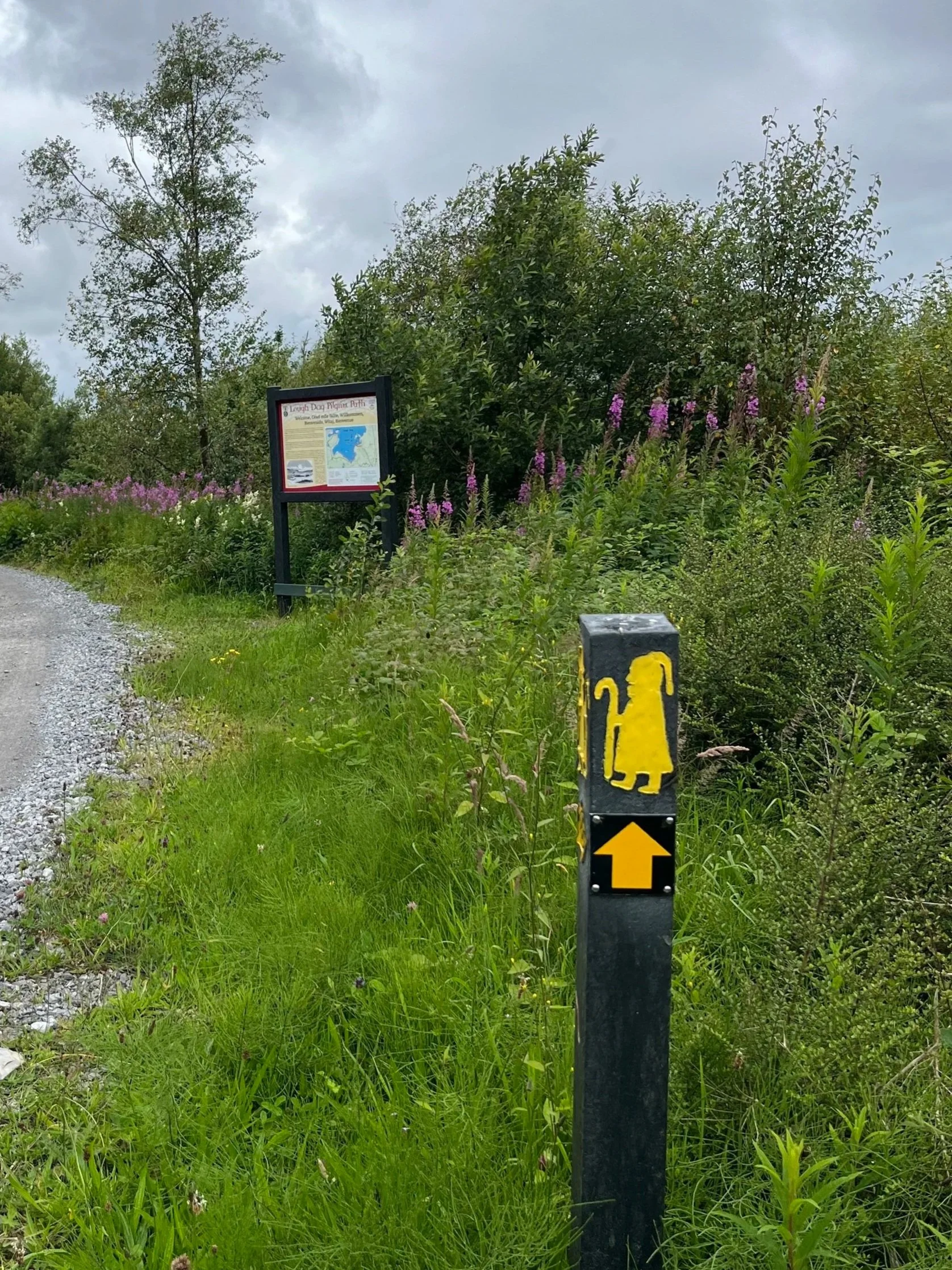
A pilgrim path around Lough Derg
After graduating from Yale Divinity School in May 2024, I decided to follow a dream I had for years. I dreamt of experiencing places of pilgrimage, walking on pilgrimages, and serving pilgrims around the world. I knew I wanted to put all my learnings from my Masters degree—from theology, to chaplaincy, to Catholic spirituality—into practice and live in communities that lived out of these liminal places of integrating the inner pilgrimage with the outer pilgrimage, as Thomas Merton reveals to us.
In one of my classes on pilgrimage, I learned about Lough Derg. I reached out to Lough Derg about coming for a few weeks to learn from this site. After graduating, I flew to Spain to walk the Camino de Santiago for forty days. Upon finishing the Camino, I then flew to Dublin and began the long journey to Lough Derg. On the boat to the island, I met a man who had been coming to Lough Derg for decades. He asked me if I knew what I was getting myself into, and I came to learn that I really did not.
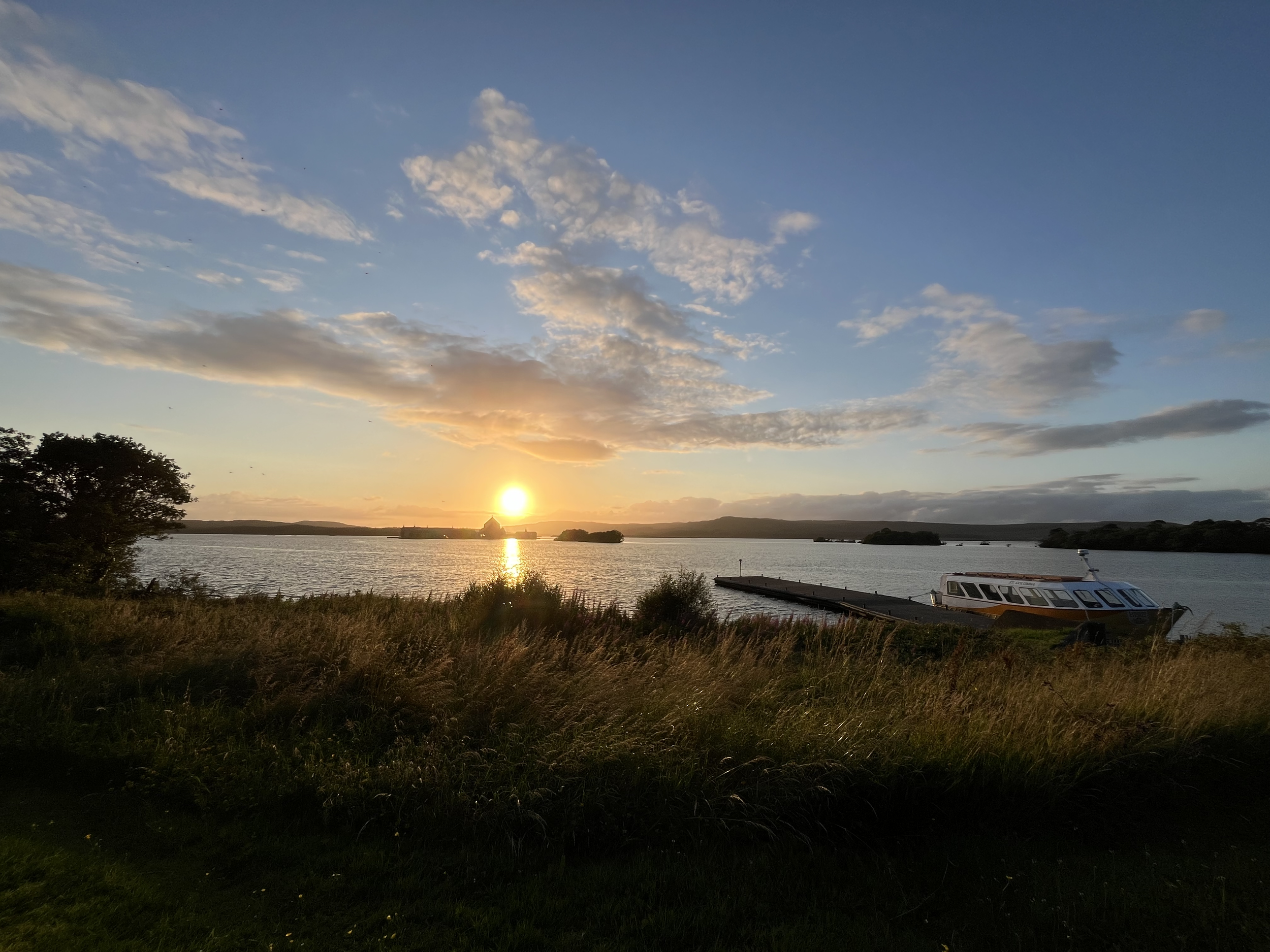
The boat that takes pilgrims across the water to Lough Derg island (in the distance)
I discovered the “symbolic acting out of an inner journey” through the hundreds of pilgrims I met. Over the weeks, I found myself hearing the stories of pilgrims while helping with prayer intentions, working in the gift shop, and also with participating in the daily liturgies. After my first week, I knew I needed to experience the three day pilgrimage. I knew this would allow me to enter more deeply into the intimacy of this holy island and the countless pilgrims that have fulfilled the journey.
The three day pilgrimage was vastly different from any other pilgrimage I had experienced.
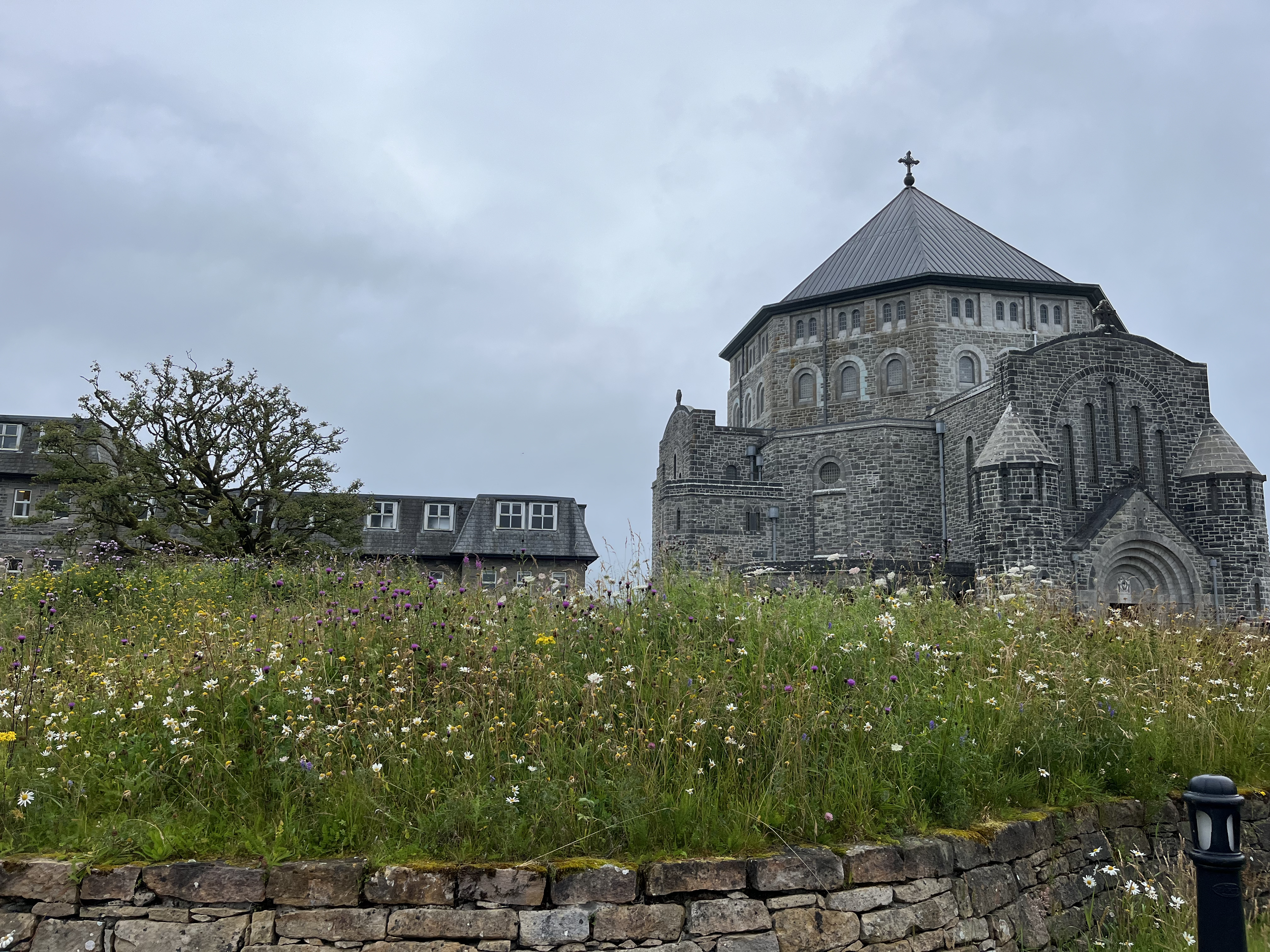
Pilgrims walk dozens of times around the basilica and have an overnight vigil in the basilica with their fellow pilgrims
On my first day, I struggled remembering the prayers pilgrims said and the movements pilgrims did while moving around the island. After some time, I found myself settling more into the rhythm and noticed how the prayers became less about the words—rather it felt that I participated in a divine dance that sunk into my body and carried me through the prayers and hours of pilgrimage. I was especially struck by the vigil where those on pilgrimage became a family. As we were all tired, hungry, and cold, I saw so much kindness, grace, and togetherness that felt like a reflection of divine Love. I also found this reflection through the staff of Lough Derg. The laughter, devotion, and camaraderie created warmth and welcome on this holy island.
My time at Lough Derg has shaped my own spirituality and being. As I continue in my journeys, I am often reminded of my time on this holy island—as I meditate while walking, stumble upon a beautiful island, or even eat toast and black tea. I am grateful to Lough Derg—the island, pilgrims, and staff—for making this holy island become a home to me.
A poem by Seamus Heaney, Part XII of Station Island, as a pilgrim on Lough Derg.
“You are fasted now, light-headed, dangerous.
Take off from here. And don’t be so earnest,
so ready for the sackcloth and the ashes.
Let go, let fly, forget.
You’ve listened long enough. Now strike your note.”
The title of the collection, Station Island, is taken from the long poem of the same name that comprises the second part of the collection. It refers to Station Island (also known as Saint Patrick's Purgatory) on Lough Derg in County Donegal, Ireland, site of Christian pilgrimage for many centuries. During his undergraduate years at Queen's University Belfast, Heaney went on the pilgrimage several times.
